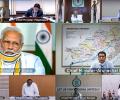
During his interaction with the chief ministers, Prime Minister Narendra Modi assured that more economic activities would resume; he also said that zone identification may be left to the states.

With states in north India imposing stricter measures to curb intra-state movement after April 20, makers of summer products such as air conditioners, refrigerators, colas, and ice creams are estimating a 25-60 per cent drop in yearly sales.

The Ministry of Home Affairs (MHA), in its circular, had asked all employers to make payment of wages to their workers without any deduction for the period their establishments were under closure during the lockdown to contain COVID-19.

Shaktikanta Das will demit the office on Tuesday after completing six years as the 25th Governor of the Reserve Bank of India. Revenue Secretary Sanjay Malhotra will replace him as the 26th Governor. He was appointed as the Governor on December 12, 2018, after the abrupt exit of Urjit Patel.
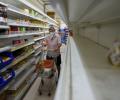
'In the first phase, you might allow 30 per cent of the workforce to come in and see how it goes,' says industrialist Harsh Goenka.

With COVID cases declining, Delhi will see further relaxation in lockdown, including reopening of markets and malls and resumption of metro services, from June 7 while Maharashtra will implement a five-level plan to ease curbs based on weekly positivity rate and occupancy of oxygen beds in districts.

Here is a look at coronavirus-induced restrictions imposed by states and union territories.

IIn the first of a year-end series of observations on 2020, Dominic Xavier is still shocked by the nightmare that the lockdown wrought on India.
Sukanya Verma makes a fun and filmi list of things we miss.

'The spread of COVID-19 is not increasing across Maharashtra.' 'Only Mumbai remains a concern.'

Royal Challengers Bangalore pacer Mohammed Siraj grabbed four wickets to lead his side to a 24-run win over Punjab Kings.

Almost all states and Union Territories have extended the curbs which they first started imposing in mid-April as the second COVID wave hit the country.

From May 18, there will be no curfew in the state. But the lockdown will be there till May 31, said the chief minister.

Banerjee told journalists after an all-party meeting that though the participants differed over ways to tackle the pandemic, consensus emerged that the lockdown should be extended with relaxations.
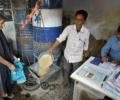
The Pradhan Mantri Garib Kalyan Anna Yojana (PMGKAY) was launched in March 2020 to provide free 5 kg foodgrains per person per month to about 80 crore beneficiaries covered under the National Food Security Act (NFSA) to reduce their hardship during the lockdown period. This was over and above the general allocation under the NFSA.

'Last time we waited for the situation to get better but ultimately had to go back home anyway'

As per the law, obstruction or refusal to comply with directions results in loss of lives or imminent danger thereof, shall on conviction be punishable with imprisonment for a term which may extend to two years.
The government has decided to postpone the release of the new Foreign Trade Policy (FTP) and extend the existing one by six months on account of global uncertainties and currency fluctuations. The government was scheduled to announce the new FTP by the end of September. The current policy was to end on September 30.

The ministry of home affairs, however, said there was a need to maintain a strict lockdown till May 3 so that the gains are not squandered away.
In Round 1, 62 per cent strongly supported the continuation of the lockdown and 24 per cent expressed some support.
The country has been under lockdown since March 25 and the third phase ends on May 17.

'There are worse things than being stuck with your in-laws during a nation-wide lockdown. Like actually enjoying being in that situation.'

The journey of getting used to a new way of life -- without domestic help, without the necessity of dressing up to step out and just staying cooped up indoors -- has been out of the ordinary, equal parts good, bad and ugly.
During his talks with the chief ministers, Shah sought to know the areas of concern of the states and the sectors they want to open up further from June 1, the official said.

'We will need more than 21 days of lockdown for sure.'
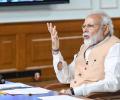
The video conference comes amidst indications that the central government may extend the lockdown across the country beyond April 14 after several states have favoured the extension to contain the fast-spreading virus.

Here are some grandma tips to keep your skin and hair glowing without going to the salon.

Addressing a press conference via video conference, Gandhi also said the entire country has to fight the crisis "unitedly" and there is need to grant adequate resources to the states to help them deal with it in a "nuanced" manner.

India's curve, yet to flatten vis-a-vis countries with similar or more conservative plans to ease restrictions, still points to 'exponential growth', despite India having tested much fewer people.
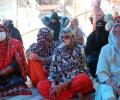
Several protests and mass movements across Delhi and the country were at their peak when the coronavirus threat slowly crept in, throwing normal life out of gear and pushing everyone indoors to ensure social distancing.

According to sources, all private offices will work from home and only government offices and essential services will be open.
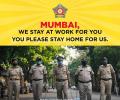
Rediff.com brings you some of the memes to cheer you up during this trying times.

The prime minister appealed to people not to panic, saying thronging shops will pose the risk of spread of COVID-19. 'There is absolutely no need to panic; the Centre and states will work together to ensure availability of essential commodities, medicines, etc,' he said.
The curfew, which was earlier scheduled to end on 7 am on Monday, has been extended.

Stating that some media reports were creating confusion in the minds of people, he said the government was easing the lockdown restrictions in phases to restart the economy. 'Some television news channels and social media platforms are speaking about lockdown being reimposed and closure of all shops. But the government has not taken any such decision,' Thackeray said in a statement.

In a communication to all states and union territories, Home Secretary Ajay Bhalla asked them to strictly ensure prohibition of all non-essential activities between 7 pm and 7 am, saying the night curfew imposed to contain the coronavirus spread is an 'important element of the home ministry guidelines'.

Business activity has fallen by a fourth of the pre-COVID levels due to lockdowns imposed by states to contain the spread of the second wave of COVID-19, Japanese brokerage Nomura said on Tuesday. However, it said the falling activity levels will have a muted economic impact and maintained its growth estimates for the year, saying the lockdowns present "downside risks". As of April 25, the Nomura India Business Resumption Index (NIBRI) registered its steepest weekly fall in over a year of 8.5 percentage points to 75.9, which is 24 percentage points below pre-pandemic normal, the brokerage said in a statement.
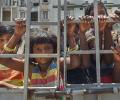
India is going into the longest lockdown in the world, with the least amount of notice given to its people and the least preparation by its government.

In a communication to the chief secretaries of the states and Union territories, Union Home Secretary Ajay Bhalla said the guidelines for the fourth phase of the lockdown were issued after taking the views of the states, following a video-conference held by Prime Minister Narendra Modi with chief ministers on May 11.
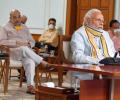
During his talks with the chief ministers, Shah sought to know the areas of concern of the states and the sectors they want to open up further from June 1, the official said.
 © 2026 Rediff.com - Advertise with us - Disclaimer - Privacy Policy - Sitemap - Feedback - About us - Terms of use - Grievances